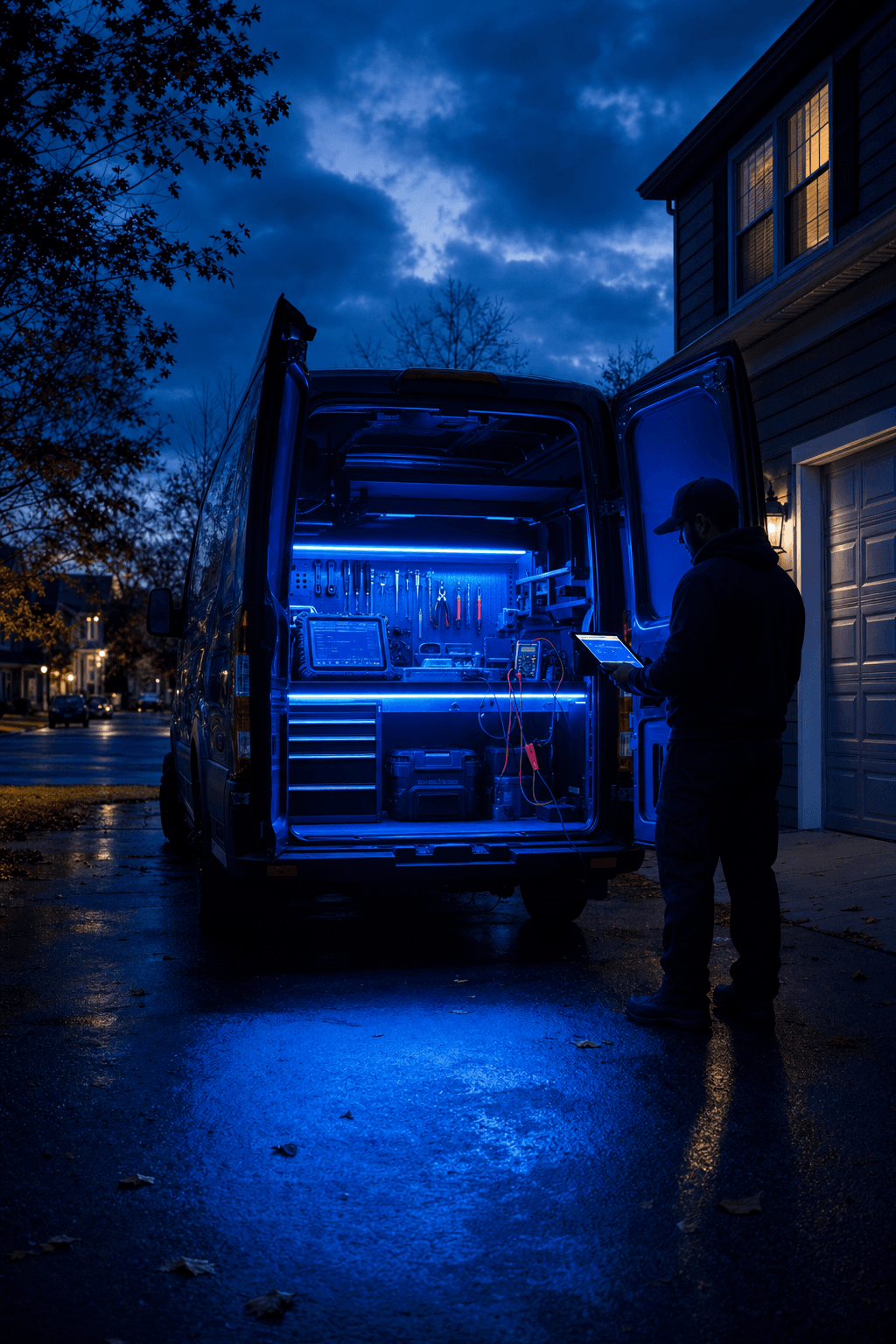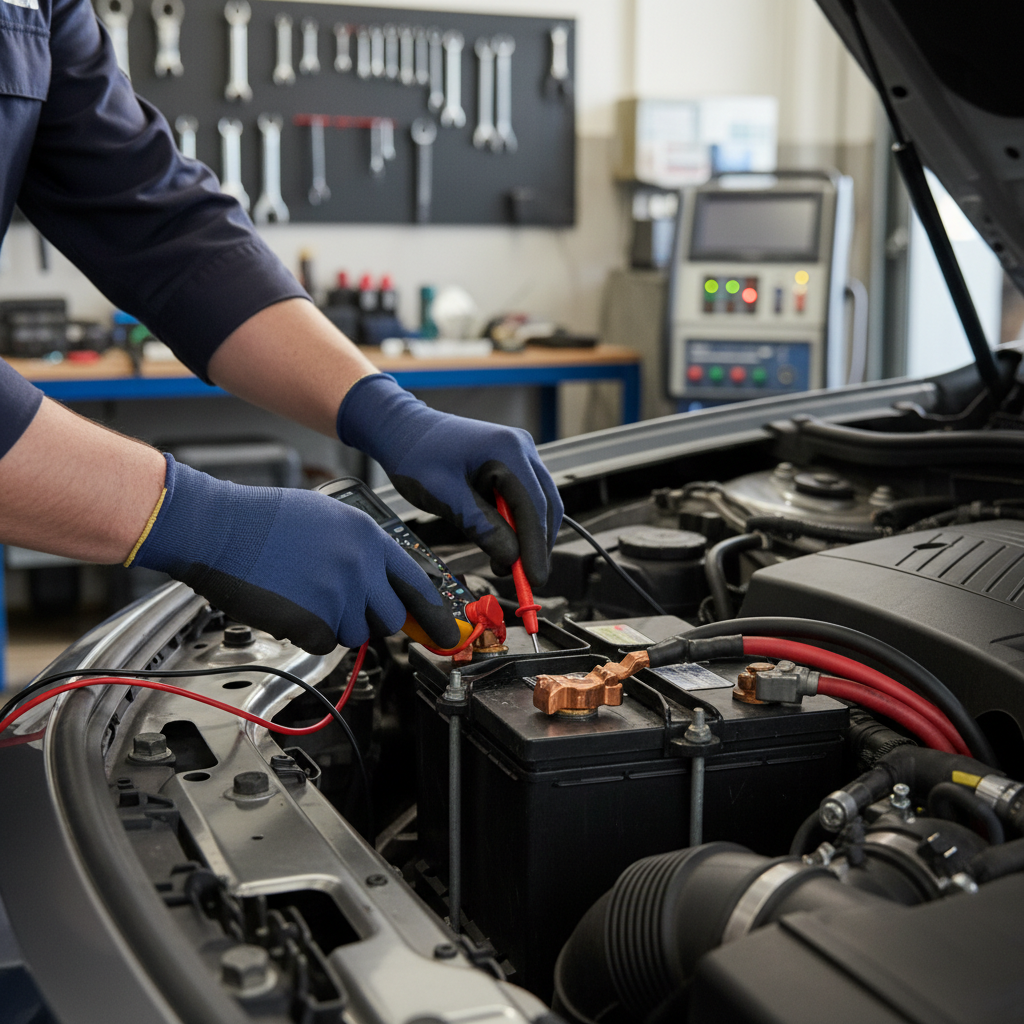
Distinguishing battery vs alternator vs starter symptoms depends on when the failure occurs and the specific sounds produced. A dead battery often causes rapid clicking or dim lights before starting, while a failing alternator typically results in engine stalling or flickering lights while driving. If the car has power but produces a single loud click or total silence when turning the key, the starter is likely the culprit.
You turn the key and hear nothing but a hollow click or a sluggish groan, leaving you stranded in your own driveway. It is a frustrating scenario every driver faces eventually. The real challenge is identifying the culprit before you start throwing money at parts you do not need. Because the battery, alternator, and starter operate in a continuous electrical loop, a failure in one often mimics the symptoms of another. Misdiagnosing the issue leads to wasted time and unnecessary repairs; a mistake that can leave you stuck on the side of the road again tomorrow. In this guide, we break down the specific warning signs for each component. You will learn how to differentiate between a dying cell and a faulty solenoid, why your car might stall mid drive, and why a basic parts store scan often misses the full story.
Understanding the Starting System: The Battery, Alternator, and Starter Connection

Every time you turn your key or push the start button, a precise sequence of events occurs within a closed loop known as the starting and charging system. Think of this process as a high speed relay race where the battery, starter, and alternator must pass the baton perfectly to keep your vehicle reliable. When diagnosing battery vs alternator vs starter symptoms, it is vital to understand that a failure in one component rarely happens in isolation because these parts are part of a continuous cycle.
The battery serves as the initial energy reservoir, holding the chemical charge needed to wake the vehicle up. Once you initiate the ignition, the starter motor draws a massive burst of current from that battery to physically crank the engine over. After the engine is running under its own power, the alternator takes over the lead role. It generates electricity to power your headlights, radio, and sensors while simultaneously recharging the battery to replace the energy used during the start.
In the coastal environments of Virginia Beach and Norfolk, this system faces unique challenges. High humidity and salt air significantly accelerate corrosion on electrical connections, battery terminals, and ground straps. Corroded connections create resistance, which forces the starter to work harder and the alternator to run at a higher duty cycle than intended. This interconnectedness means a failing battery can eventually burn out your alternator, or a dragging starter can drain a brand new battery. A professional mobile mechanic for diagnostics can test the health of this entire loop to identify the root cause before you invest in a starter and alternator replacement.
Dead Battery Symptoms: The Most Common No Start Culprit
When your vehicle refuses to fire up, the battery is the statistical favorite for the blame. Identifying specific dead battery symptoms allows you to distinguish between a minor electrical issue and more complex mechanical failures. The most recognizable sign is a rapid, machine-gun-like clicking sound when you turn the key. This occurs because the battery has enough voltage to engage the starter solenoid but lacks the amperage to actually rotate the engine. You might also notice interior lights that appear normal at first but dim significantly or go black the moment you attempt to crank the engine.
In our local service area spanning Chesapeake to Newport News, terminal corrosion is a frequent culprit. The salt-heavy air in Hampton Roads accelerates the buildup of white or bluish-green acidic crust on the battery posts. This buildup creates high resistance, preventing the alternator from recharging the battery and the battery from sending power to the starter. If you see this buildup, it is a clear indicator that the electrical path is compromised.
Vehicle owners often ask if a neglected battery can damage other components. The answer is a definitive yes. When a battery is near the end of its typical 3 to 5 year lifespan, it can no longer hold a steady charge. This forces the alternator to work at 100 percent capacity during every mile you drive, eventually leading to internal component burnout. Overworking the charging system this way is a primary reason drivers end up needing a starter and alternator replacement.
Battery Health Indicator | Typical Symptom | Diagnostic Meaning |
|---|---|---|
Cranking Sound | Rapid clicking or very slow groan | Low amperage/insufficient charge |
Dashboard Lights | Flicker or turn off during start | Voltage drop under load |
Battery Age | 3+ years in coastal VA | Approaching end of service life |
Visual Inspection | Corroded or "fuzzy" terminals | High resistance connection |
If your car is completely unresponsive, towing and roadside assistance may be necessary to move it to a safe location. However, before you replace a battery that might still be good, a mobile mechanic for diagnostics can perform a load test to verify if the battery is truly dead or just struggling with a parasitic drain or a loose connection. Correcting these battery vs alternator vs starter symptoms early can prevent a simple battery swap from turning into a costly multi-part repair.
Bad Alternator Symptoms: When Your Car Dies While Driving
While a dead battery usually prevents the car from starting, a failing alternator is the primary reason a vehicle stalls while you are driving through traffic in Norfolk or Chesapeake. The alternator acts as the power plant of your vehicle. If it stops producing electricity, the car begins to run solely off the battery's limited reserve. Once that energy is depleted, the ignition system loses power and the engine shuts down. A telltale sign of this failure is fluctuating headlight brightness. If your lights dim at a stoplight but brighten when you rev the engine, the alternator is likely struggling to maintain a consistent voltage output.
One of the most common points of confusion in battery vs alternator vs starter symptoms involves the red battery warning light on your dashboard. It is ironic that this light rarely signals a bad battery. Instead, it indicates a charging system fault, meaning the alternator is not outputting the roughly 13.5 to 14.5 volts required to run the vehicle and maintain the battery. You might also notice electrical ghosts, such as power windows that crawl upward slowly or a radio that resets itself unexpectedly as the vehicle's computer prioritizes essential engine functions over accessories.
Symptom | Probable Alternator Failure Mode |
|---|---|
Flickering Dash Lights | Failing internal voltage regulator |
Burning Rubber Odor | Slipping drive belt or overworked wiring |
Growling or Whining Noise | Worn internal rotor bearings |
Stalling After a Jump | Inability to sustain the electrical load |
Mechanical sounds and smells provide additional clues that a simple battery test might miss. A growling noise often points to worn bearings inside the alternator housing, while a burning rubber smell can indicate a belt that is slipping on a seized pulley. If your vehicle starts with a jump but dies shortly after the cables are removed, the alternator is almost certainly the culprit. In these cases, towing and roadside assistance may be required to get the vehicle to a safe service location. A professional mobile mechanic for diagnostics can verify the charging output before you commit to a starter and alternator replacement, ensuring you aren't replacing parts that are still functional.
Bad Starter Symptoms: Full Power but No Action

While a failing alternator causes issues primarily while the engine is running, a bad starter prevents the cycle from even beginning. Identifying a starter failure requires looking for a specific disconnect between the vehicle’s electrical health and its mechanical response. If you turn the ignition and see bright headlights, a responsive dashboard, and a crisp interior display, but hear only a single, solid 'clunk' or total silence, the starter motor has likely failed. This 'clunk' is the sound of the starter solenoid engaging the flywheel without the electric motor actually rotating the engine. It is a defining characteristic in battery vs alternator vs starter symptoms because a weak battery typically produces a rapid, machine-gun clicking sound as the solenoid repeatedly tries and fails to stay engaged due to low voltage.
Starter issues often present as intermittent frustrations. You might find that your vehicle starts perfectly at a home in Suffolk but refuses to turn over later that afternoon in a parking lot. These 'flat spots' in the starter’s internal components mean the motor only works when it happens to stop in a specific position. Some drivers rely on the 'hammer trick,' which involves tapping the starter housing with a tool to jar the internal brushes into making contact. While this might get the engine turning one last time, it is not a repair. A starter that requires physical force to operate is a clear candidate for starter and alternator replacement.
Because a seized engine or a faulty ignition switch can sometimes mimic these symptoms, professional verification is necessary. A mobile mechanic for diagnostics can perform a voltage drop test on the starter circuit to ensure the motor is receiving the correct signal and power. If the car remains immobilized, towing and roadside assistance can help transport the vehicle to a safe location for a full component swap.
Diagnostic Testing: Why Parts Store Scans Can Be Misleading
Relying on a free handheld test from a local parts store often leads to a misdiagnosis. A battery might show a 'Pass' on a basic conductance tester while still failing to provide sufficient cranking amps under a real-world load. Furthermore, these basic tests ignore the integrity of the wiring connecting the starting trio. A professional mobile mechanic for diagnostics performs a voltage drop test, which measures the electrical pressure lost as current travels through cables and connections. In the salt-rich air of Virginia Beach and Chesapeake, a battery cable can look perfectly clean at the terminal while being completely corroded inside the insulation, creating resistance that mimics a bad starter or a dead battery.
Modern vehicles complicate the battery vs alternator vs starter symptoms because the charging system is often managed by the Powertrain Control Module (PCM). A simple multimeter reading does not reveal if the computer is correctly communicating with the alternator. By using professional grade diagnostic tablets, a technician can view live data streams from the PCM to verify duty cycles and charging commands. This data-driven approach ensures that a starter and alternator replacement is only recommended when the component itself has failed, rather than a faulty fuse, relay, or damaged ground wire. If the diagnostic process reveals a total system failure that cannot be serviced safely on-site, towing and roadside assistance can be arranged to transport the vehicle to a specialized facility for further repair.
Frequently Asked Questions About No Start Conditions
Understanding the nuances of battery vs alternator vs starter symptoms often leads to specific questions about how to handle a breakdown. A common query is whether you can jumpstart a car with a bad alternator. While the vehicle will likely fire up, it will not stay running for long. Because the alternator is responsible for sustaining the electrical load, the engine will die as soon as the battery’s reserve is depleted.
Drivers often wonder how long a vehicle will run once the alternator fails. Typically, you have between 5 and 30 minutes of driving time. This duration depends heavily on your battery's age, the health of its cells, and how many electrical accessories you are using. If you are driving at night with headlights on or in the Virginia Beach summer heat with the AC blasting, the battery will drain much faster.
FAQ Topic | Practical Answer |
|---|---|
Starter vs. Alternator | Starters prevent the engine from cranking; alternators prevent the engine from running or recharging the battery. |
Jumpstarting | Possible, but the car will stall once the battery is empty. |
Survival Time | 5 to 30 minutes depending on electrical load. |
Repair Capability | A mobile mechanic for diagnostics can often perform a starter and alternator replacement on-site. |
Distinguishing between these components is straightforward if you look at the failure point. If the engine refuses to rotate despite having power, the starter is the likely culprit. If the engine cranks but the car eventually dies or the battery won't stay charged, the alternator has failed. If the car stalls in traffic or won't restart after a jump, you should call for towing and roadside assistance to avoid being stranded in an unsafe location. Professional testing ensures you address the specific failure point rather than guessing.