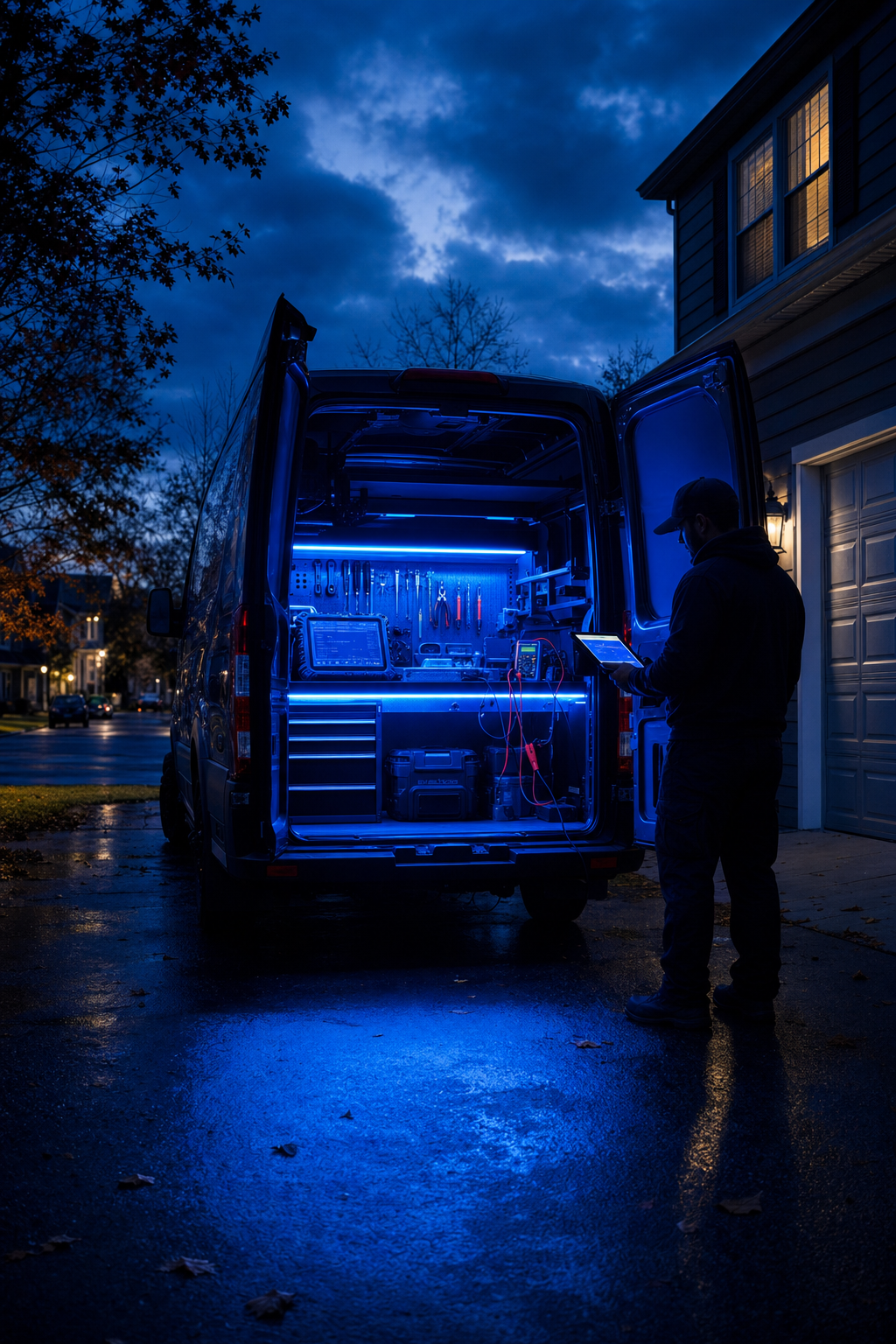
Key brake warning signs Hampton Roads motorists should watch for include high pitched squealing, grinding sounds, and unusual vibrations or pulsing in the brake pedal. These indicators often suggest worn brake pads or damaged rotors; consequently, seeking professional inspection is vital to maintain vehicle safety and performance.
Nothing interrupts a peaceful drive across the James River Bridge quite like the high pitched shriek of your brakes. In Hampton Roads, our fall weather brings a mix of coastal humidity and cooling temperatures that can reveal mechanical issues you did not notice over the summer. Ignoring a subtle vibration in the pedal or a faint grinding sound is a risk no driver should take. As the local road grit and salt air begin to take their toll on your vehicle, understanding these warning signs becomes essential for your safety on I-64. This guide explains how to differentiate between common brake noises, the impact of our local climate on your rotors, and what certain pedal sensations indicate about your calipers. You will also learn how to perform a quick visual inspection at home and why professional mobile repair offers the most efficient solution for your schedule.
Why Autumn Weather in Hampton Roads Affects Your Brakes
Autumn in the Hampton Roads area brings a distinct shift in air quality. As temperatures drop in Virginia Beach and Norfolk, the humidity often remains high, leading to heavy morning dew that settles on your vehicle components. Since brake rotors are typically made of cast iron, this moisture causes a thin layer of surface rust, or oxidation, to form overnight. When you first pull out of your driveway, you might hear a light scraping or squeaking sound. In many cases, this is simply the brake pads scrubbing that surface rust off the rotor.
Distinguishing between these temporary seasonal noises and genuine brake warning signs Hampton Roads drivers should worry about is critical for safety. If the noise disappears after three or four stops, it is likely just a result of the coastal moisture. However, if the sound persists throughout your commute to Chesapeake or Portsmouth, or if you notice changes in pedal feel, it indicates a deeper issue. Persistent noise could stem from worn friction material, trapped debris, or contaminated pads. In these cases, professional vehicle diagnostics are necessary to determine if you need mobile brake repair to ensure your system remains reliable on damp fall roads.
Squeaking vs. Grinding: Identifying Genuine Brake Warning Signs
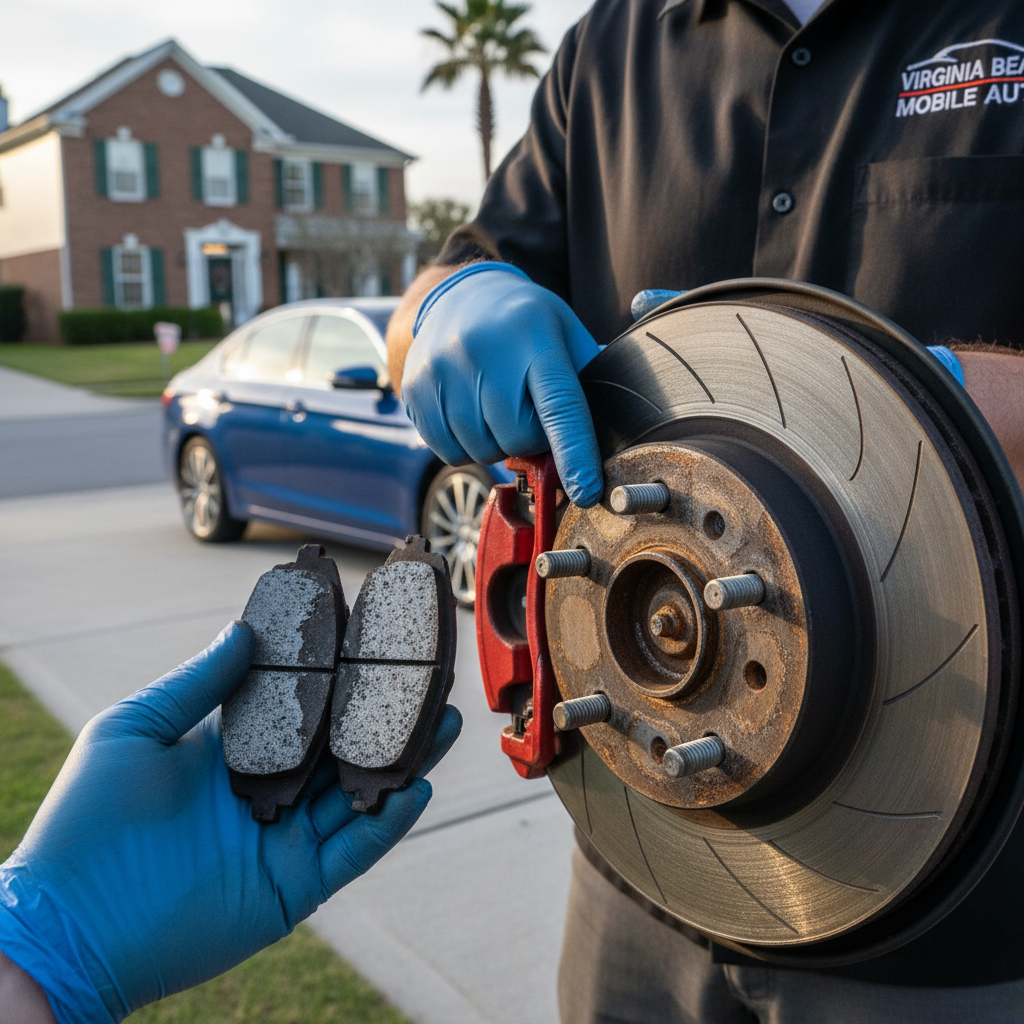
Identifying the difference between a high-pitched squeal and a low-frequency grind is essential for accurately diagnosing your vehicle. While morning surface rust produces a temporary scraping sound, a persistent, piercing squeal is typically the result of a wear indicator. This is a small metal tab attached to the brake pad backing plate. When the friction material wears down to a specific thickness, usually around 2mm or 3mm, this tab makes contact with the rotor to create a deliberate warning noise. If you hear this sound while cruising down Virginia Beach Boulevard or when applying light pressure to the pedal, it is time to schedule an inspection.
In contrast, a grinding or growling sound indicates a more severe mechanical failure. This noise signifies that the friction material has been completely exhausted, leaving the metal backing plate to press directly against the cast iron rotor. This metal-on-metal contact creates significant heat and can quickly gouge the rotor surface or even damage the caliper piston. When a vehicle reaches this stage, it requires immediate mobile brake repair to prevent further component destruction. Driving a vehicle that is grinding is unsafe and often leads to much higher repair costs if the rotors become too thin to be resurfaced or reused.
Customers often ask why their brakes continue to squeal even when the pads appear to have plenty of thickness remaining. This is frequently caused by glazing, which occurs when the brake pads become overheated and the surface crystallizes into a hard, smooth finish. Glazed pads cannot grip the rotor effectively and will vibrate at a high frequency, creating a squeak. Additionally, lower-quality friction materials with high metallic content are prone to noise. During our vehicle diagnostics, we evaluate the pad condition and material quality to ensure the noise isn't masking more critical brake warning signs Hampton Roads drivers might otherwise overlook.
The Feel of the Pedal: Sponginess and Pulsing in Stop and Go Traffic
Physical feedback through the pedal provides critical diagnostic clues that noise alone cannot reveal. A pedal that feels spongy or soft often indicates a breach in the hydraulic system. Unlike brake fluid, air is compressible. If air enters the brake lines, the pressure intended to clamp the pads against the rotors is partially absorbed by the air bubbles, resulting in a sinking feeling when you apply pressure. This sensation can also point to a failing master cylinder, which is the heart of your braking system. When the internal seals of a master cylinder begin to fail, the pedal may slowly sink to the floor while you are stopped at a light. Any significant change in pedal resistance requires immediate vehicle diagnostics to prevent a complete loss of braking power.
Drivers navigating the heavy congestion on I-64 or the Hampton Roads Bridge-Tunnel (HRBT) frequently encounter another physical symptom: pulsing. When you are stuck in stop and go traffic, the constant application of brakes prevents the rotors from cooling down properly. This intense heat buildup can lead to warped rotors, technically known as lateral runout. As the brake pads press against a rotor surface that is no longer perfectly flat, the uneven surface pushes back against the caliper piston. This mechanical feedback sends a distinct vibration through the brake pedal or even the steering wheel. These vibrations are common brake warning signs Hampton Roads commuters experience due to the unique thermal demands of local tunnel traffic. If the pulsing is severe, it may require mobile brake repair to replace the rotors before the vibration causes premature wear on your steering rack or suspension bushings.
When the Car Pulls: Caliper and Alignment Issues
If you feel the steering wheel tug to one side specifically when you apply the brakes, you are experiencing a mechanical imbalance in the braking system. This symptom is distinct from a basic wheel alignment issue. While a poor alignment usually causes the vehicle to drift constantly even when cruising, a pull that occurs only during deceleration typically points to a seized or sticking brake caliper.
The caliper acts as a hydraulic clamp that presses the pads against the rotor. If the internal piston or the slide pins become corroded, the caliper may fail to apply or release pressure evenly. When the caliper on one side of the vehicle is stuck, the functioning brake on the opposite side does all the work, creating a pivot point that pulls the car in that direction. This creates a dangerous instability, especially on slick, leaf-covered roads in Suffolk or Portsmouth.
Uneven braking force is one of the more urgent brake warning signs Hampton Roads drivers encounter because it compromises control during an emergency stop. On wet fall pavement, this imbalance can lead to a wheel lock-up or an unpredictable skid. Identifying whether the issue is a seized piston, a collapsed brake hose, or uneven pad wear requires professional vehicle diagnostics. Addressing these hardware failures promptly through mobile brake repair ensures your vehicle maintains a straight path under heavy braking.
How to Inspect Your Brakes Without Removing the Wheel
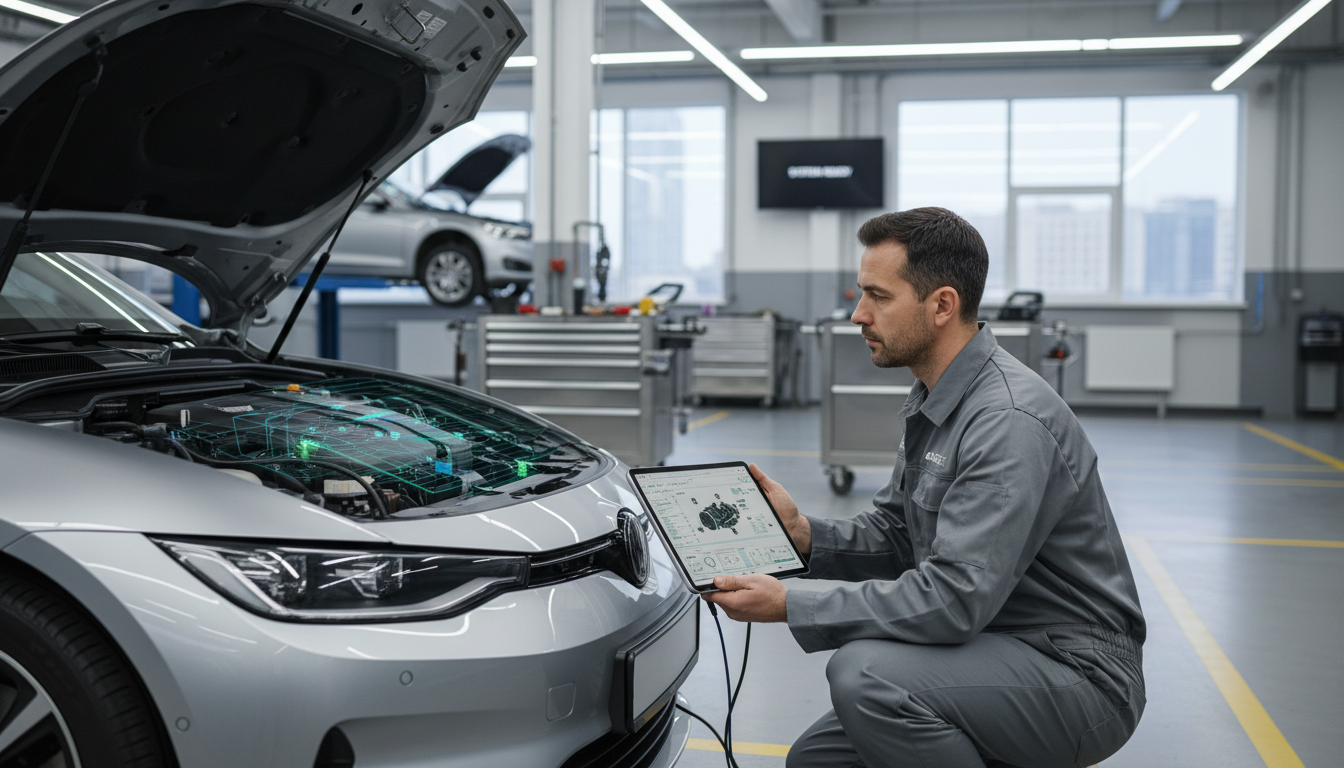
Identifying an imbalance or a seized caliper often prompts the question: can I check my brake pads without removing the wheel? For most vehicles in Virginia Beach equipped with alloy wheels, the answer is yes. You can perform a basic visual inspection in your driveway or parking space using a high-lumen flashlight.
Park the vehicle on a flat surface and ensure the parking brake is engaged.
Shine your light through the wheel spokes to locate the brake caliper, which is the large metal housing clamped over the rotor.
Look through the inspection window or gaps in the caliper to see the brake pad friction material pressed against the smooth rotor surface.
A new brake pad typically has 10mm to 12mm of friction material. As a rule of thumb, if the pad thickness appears to be 1/8th inch (approximately 3mm) or less, you have reached the danger zone for replacement. If the material looks as thin as a couple of stacked pennies, you should schedule mobile brake repair immediately.
While this peek provides a quick status update, it only reveals the condition of the outer pad. The inner pad, which is hidden from view, often wears at a different rate if a caliper pin is sticking. Therefore, a visual check should never replace a professional vehicle diagnostics session. Spotting these brake warning signs Hampton Roads residents might see through their wheels is a proactive first step, but a technician must still verify the health of the entire hydraulic system and the inner components.
Environmental Factors: Salt Air and Road Grit in Coastal Virginia
Living near the Atlantic Ocean or the Chesapeake Bay introduces constant salt exposure, which acts as a powerful catalyst for rust. In areas like Virginia Beach and Norfolk, this salt air accelerates the corrosion of metal brake lines and critical hardware. Over time, oxidized brake lines can become brittle and prone to leaking, while corroded caliper slides often lead to sticking pads. These environmental stressors create specific brake warning signs Hampton Roads residents should monitor, particularly when autumn storms increase road moisture.
Heavy seasonal rains also wash fine sand and road grit into the brake assemblies. When this debris becomes trapped between the pad and the rotor, it produces a distinct scraping or crunching sound. Unlike the steady screech of a wear indicator, grit noise is often erratic and may change in volume as the debris is crushed or ejected. If you notice a persistent grinding after a storm, a professional vehicle diagnostics session can determine if it is simple debris or a mechanical failure requiring mobile brake repair. Proper cleaning and lubrication of hardware are essential to counter the harsh coastal climate.
The Safety Advantage of Mobile Brake Repair at Home
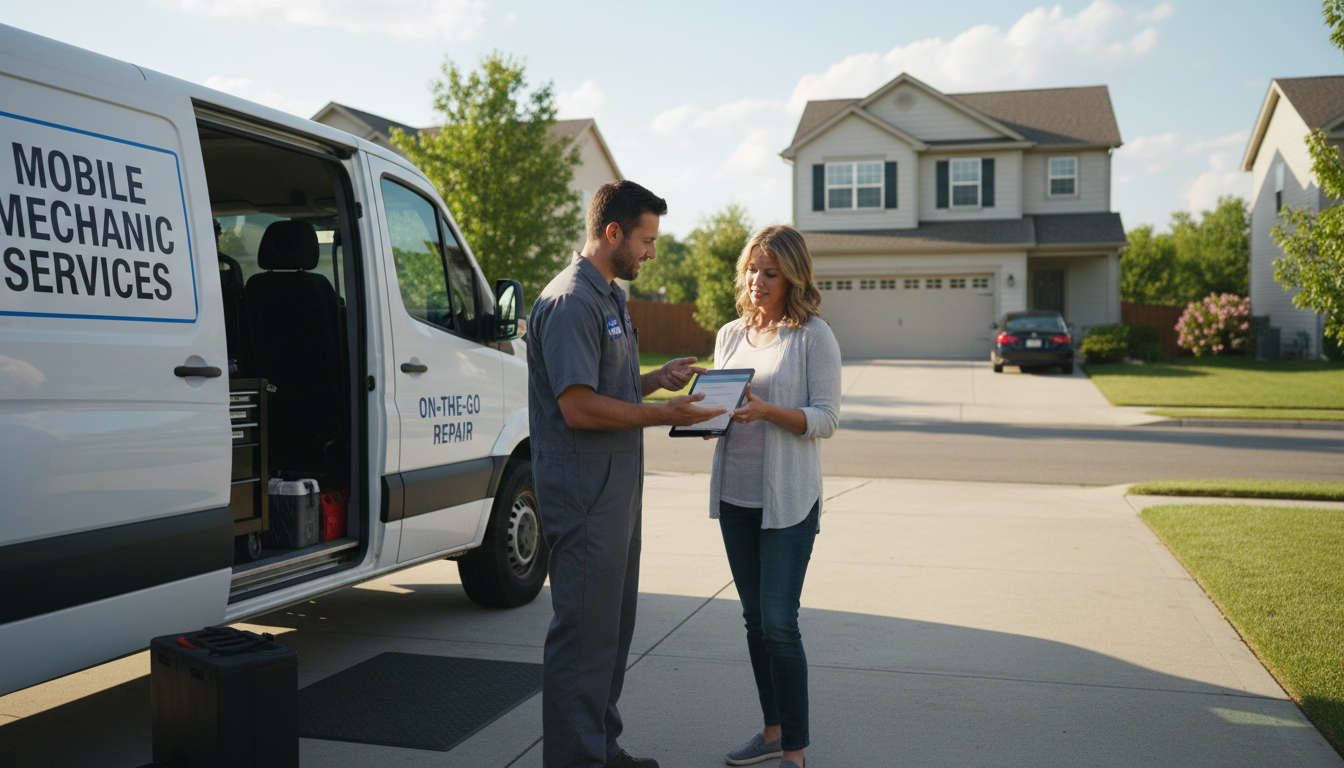
Operating a vehicle that exhibits severe brake warning signs Hampton Roads commuters often encounter is a significant safety risk, especially when salt-induced corrosion has compromised the hardware. If you hear metal-on-metal grinding or feel a complete loss of pedal resistance, the braking system is no longer capable of performing a reliable emergency stop. Attempting to drive a compromised vehicle to a traditional repair shop in Norfolk or Chesapeake puts you and other motorists at risk, particularly in the unpredictable traffic patterns of the Hampton Roads area.
Choosing mobile brake repair eliminates the danger of navigating the HRBT or I-64 with failing components. When grinding occurs, the friction material is gone; continuing to drive will quickly gouge the rotors and can lead to caliper piston failure, significantly increasing the total cost of parts. By requesting a mobile service, you keep the vehicle stationary while a technician performs on-site vehicle diagnostics at your home or workplace. This approach prevents further mechanical damage and removes the logistical headache of arranging transportation from a shop. For situations where the vehicle is unsafe to move, emergency brake repair or towing assistance ensures the car is handled professionally without risking a roadside failure.
Understanding these seasonal sounds is the first step toward maintaining a safe vehicle through the autumn months. Ignoring early warning signs can lead to more costly repairs or reduced stopping power when you need it most. If you want expert help ensuring your vehicle is road ready, we are here to assist. Our Mobile Brake Repair service offers a convenient way to get a professional inspection right at your home or office, giving you peace of mind throughout the season.